Coworking Choice
Part of Evaluating a coworking membership
Deciding whether a different workspace model would fit better
Use problems found in an existing coworking membership to compare day access, reserved desks, private space and multi-location access.
Consider a different workspace model when the current membership repeatedly fails a defined work need or locks the business into capacity it no longer uses. Name the problem, then compare models against the same ordinary and busy working days. Written rights in an offer matter more than its product label.
Match an option to the observed problem
Review a representative period. Did the team need dependable seats together, an enclosed area, occasional local access or fewer desk days? Include visitors, equipment and essential facilities. Distinguish a temporary interruption from a persistent pattern.
| Observed problem | Option to examine | Condition to verify |
|---|---|---|
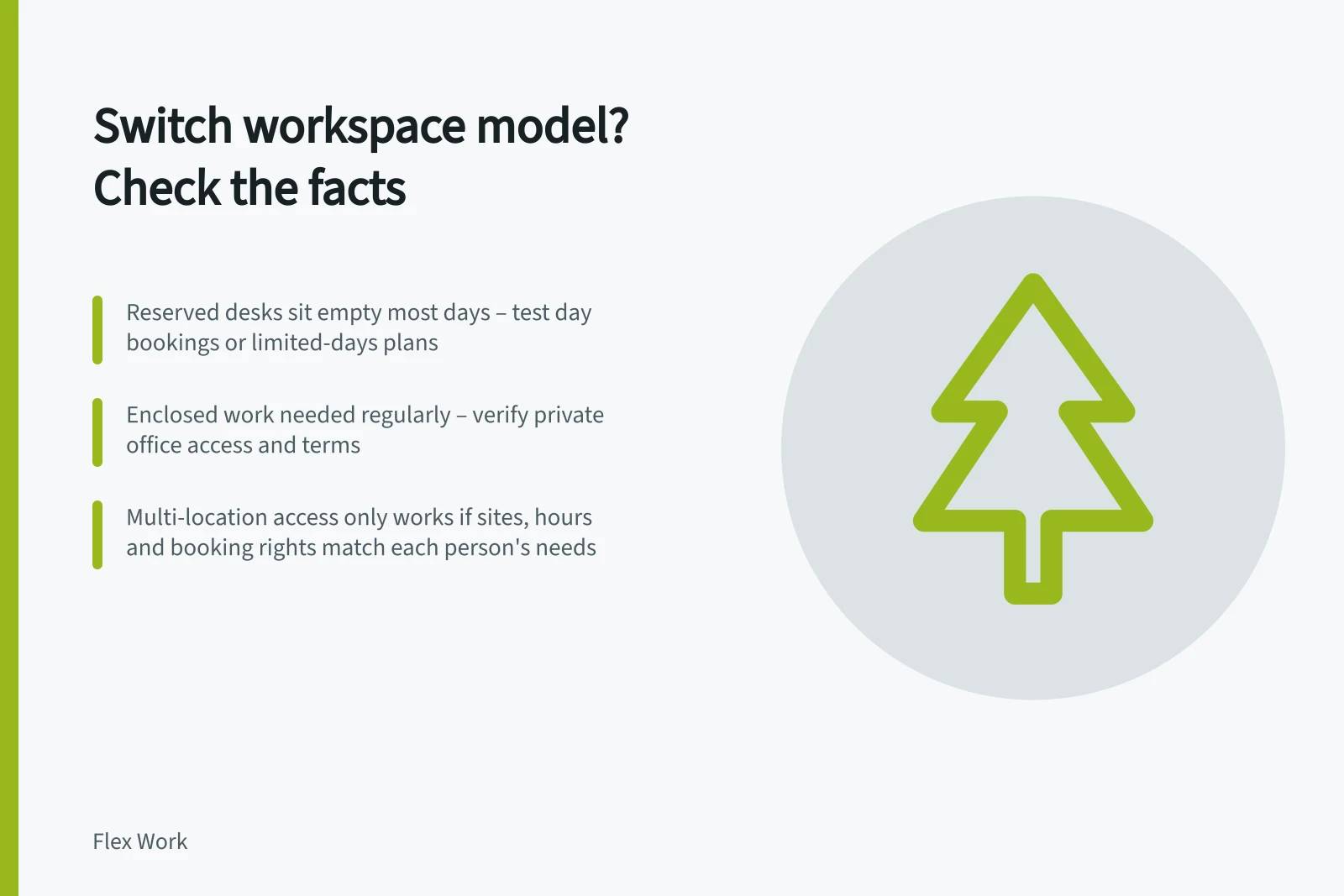
| Reserved desks sit empty most days | Day bookings or a limited-days plan | Suitable desks can be obtained on required days |
| Shared seats cannot reliably be found together | Reserved desks or enclosed team space | Simultaneous places are reserved when needed |
| Enclosed work is needed regularly | Private office within a serviced site | The actual room, access and privacy suit the work |
| Staff need different local sites | Multi-location access | Each person can use the needed site and hours |
| Meetings are occasional | Bookable rooms with lighter desk access | Suitable rooms can be obtained when needed |
These are options to investigate, not tested recommendations. A service or term change within the current plan may solve the problem.
Check each model’s actual rights
Day bookings cover specified visits; they do not reserve a regular seat on other days. A limited-days plan may reduce unused entitlement, but its booking rules, locations and commitment still matter.
Different models can include day access, dedicated desks or multi-day access plans. Provider terms and prices vary, and a product label is not a guarantee that a particular site has suitable space.
Multi-location access helps only if the relevant sites, hours and booking rights work for each person, so read the terms for the locations you need.
An enclosed office may provide a dependable area, but the agreement must still confirm users, guests, storage and access. Do not infer those rights from the word “private”.
Workspace Model Rights Overview
- Day bookingsCover specified visits; no regular seat reservation on other days
- Limited-days planMay reduce unused entitlement but depends on booking rules, locations and commitment
- Multi-location accessOnly effective if relevant sites, hours and booking rights work for each person
- Enclosed officeAgreement must confirm users, guests, storage and access — do not assume from the term 'private'
Compare the same week and commitment
Request written terms for the exact site, users and period. Place each option on one calendar: ordinary desk days, the busiest shared day, meetings and visitors. Show fixed fees, expected extra bookings and when the current arrangement can end or change. Include overlap and change charges before calling a lower monthly fee a saving.
Check a failure case as well as a normal week. What happens if shared desks are full, a suitable room cannot be booked or someone must work outside staffed hours? Seek a confirmed fallback for an essential task.
A change in location or attendance may affect employee arrangements. The Fair Work Ombudsman publishes a fact sheet on requests for flexible working arrangements; check individual circumstances and existing arrangements before setting a new attendance rule.
Decide and review
Retain the current model if it supports essential work and a service or term adjustment addresses the problem. Choose another model when its written rights cover the ordinary and busy week, its commitment is acceptable and the current agreement permits the transition. Record the condition expected to improve and check it after the first relevant busy period.